
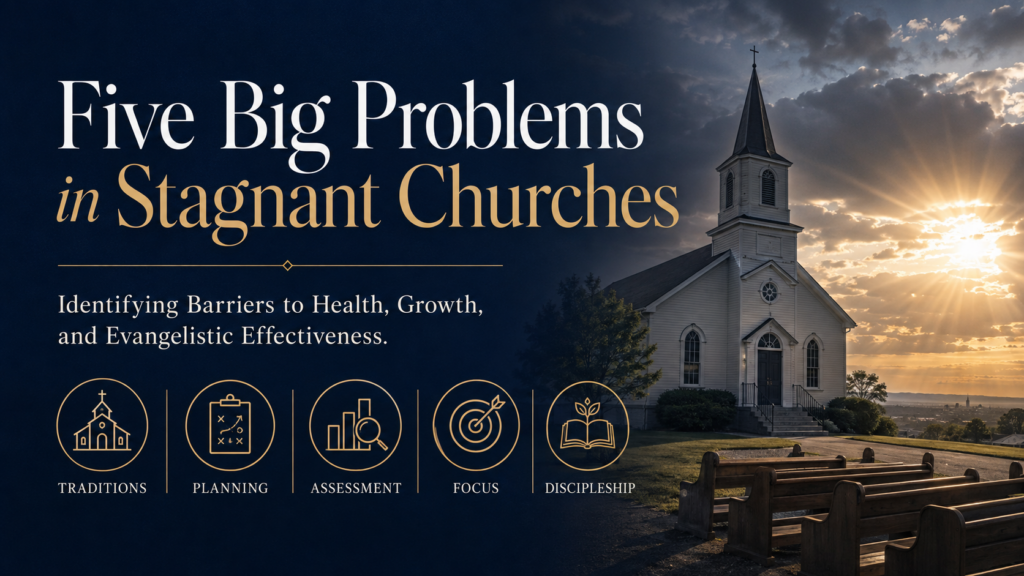
Five Big Problems in Stagnant Churches
By Steve Foster
Identifying Barriers to Health, Growth, and Evangelistic Effectiveness
Adapted from insights by Thom Rainer
Every church desires to make a lasting impact for the Kingdom of God. Yet many congregations find themselves plateaued or declining despite good intentions and faithful efforts. Thom Rainer identifies five common challenges that often hinder churches from fulfilling their mission and reaching their communities effectively.
Recognizing these obstacles is the first step toward renewed health, greater disciple-making, and increased evangelistic impact.
1. Holding on to Stale Traditions
Traditions can provide stability and preserve valuable aspects of a church’s heritage. However, when maintaining traditions becomes more important than reaching people with the gospel, ministry effectiveness suffers.
Are our traditions helping us accomplish our mission, or are they preventing us from engaging our community effectively?
2. Poor or Nonexistent Planning
Healthy churches are intentional. They establish goals, develop strategies, and align their ministries with a clear mission. Without planning, churches often drift rather than advance.
Do we have a clear and actionable plan for evangelism, discipleship, and community engagement?
3. Not Enough Assessment or Evaluation
Effective ministries regularly evaluate their effectiveness. Churches that never assess their ministries often repeat ineffective practices and miss opportunities for improvement.
When was the last time we honestly evaluated our ministries and adjusted them for greater effectiveness?
4. Too Much Inward Focus
A church exists not only for its members but also for those who have yet to hear and respond to the gospel. When the majority of attention and resources are directed inward, outreach and mission become secondary priorities.
Are we more focused on meeting our own needs than reaching our mission field?
5. Depending on the Pastor Instead of Making Disciples
Scripture teaches that pastors are called to equip believers for ministry. Healthy churches develop disciples who make disciples rather than expecting the pastor to carry the entire ministry load.
Are we equipping and empowering members to serve and share their faith, or are we relying primarily on pastoral leadership?
Questions for Reflection
- Are there traditions in our church that may be limiting our effectiveness in reaching people today?
- Do we have a clear strategy for evangelism, discipleship, and community engagement?
- When was the last time we evaluated our ministries and made meaningful changes?
- Are we intentionally focused on reaching people outside our church?
- Are we developing disciples who actively serve, share their faith, and disciple others?
Action Steps for Church Leaders
Pray Intentionally
Ask God to give your church wisdom, humility, courage, and a renewed burden for reaching people with the gospel.
Evaluate Honestly
Identify one ministry, process, or tradition that should be assessed for greater Kingdom effectiveness.
Plan Strategically
Develop a simple, actionable plan to strengthen evangelism and disciple-making throughout the church.
Seek Feedback
Invite honest input from leaders, volunteers, and members regarding areas that need improvement.
Mobilize the Church
Challenge every believer to take one step toward becoming a disciple who makes disciples.
Moving Forward
Healthy churches are not perfect churches. They are churches that continually seek God’s direction, evaluate their effectiveness, and remain committed to fulfilling the Great Commission.
When churches remain focused on evangelism, disciple-making, and reaching their mission field, they position themselves for renewed health and greater Kingdom impact.
What do you believe is the greatest challenge facing churches today?
Published August 19, 2026